What is a COA for CBD?
A Certificate of Analysis (COA) is a document that proves a CBD product has undergone lab testing. This testing is a means of proving to the consumer, retailer, as well as the government, that the hemp-derived product contains less than 0.3% Delta 9 THC by weight. These tests, used to check cannabis plants for any unwanted components, have become mandatory for retailers to make available for consumers after the passing of the 2018 Farm Bill. The need for these tests came from the legal distinction between distinction between and non-hemp cannabis.
Where Can I Find the COA for a Product?
At the bottom tagline of any page on our website, click on the link titled Certificates of Analysis.
At the bottom tagline of every product on our website, click on the link titled Certificates of Analysis – see example below. All COAs are also available on our Certificates of Analysis page.
That page contains the grand list of our products’ corresponding COAs, all available as downloadable PDFs. Check back whenever a new product drops to see its breakdown and feel free to call or text (408) 777-6783 with any questions.
Traveling with CBD and THC Products
Though all of our products fit within federal limits, we advise having this information on hand while traveling. Domestically, there should be no issue. Internationally however, we advise researching each country of travel’s restrictions and legal limits.
Personally, I faced no issues traveling in/out of France with these products. I came over-prepared with printed papers of our COAs and they really just wanted to make sure I had nothing sharp or containing bomb residue on me or my belongings. I practiced explaining CBD to folks in French as if I was going to be interrogated and have to defend myself. Again, this is not the case for every individual, nor every country. We see this in the case of WNBA player Britney Griner being arrested in Russia for having cannabis cartridges containing THC.
What Gets Tested in CBD Products?
Many components of the cannabis plant are tested for legal reasons, but also for consumers and budtenders to make the most educated choice of strain/product to fit customer needs. There are over 100 cannabinoids found in Cannabis sativa L., the parent hemp plant. That’s a lot, and we are still finding out more about how each cannabinoid affects the endocannabinoid system.
From the raw plant, we find the acid forms of these cannabinoids (THCa, CBDa, CBGa, etc.) which can be extracted from a raw press or juicing method. When exposed to heat, like through smoking or drying the plant, these acids breakdown to form their more active forms (we’ll be posting more information about how these different cannabinoids affect humans as studies surface and as classifications get lifted). The four we focus on in our products include Delta-9 THC, CBD, CBG, and CBN.
In the product testing phase, labs check for two main things: total Delta-9 THC percentage by weight/volume and CBD concentration or dosage. Additionally, suppliers can choose which products get tested for more compounds, like testing plant matter for pesticides or vape cartridges for adulterating solvents like Vitamin E oil.
To judge what flavors and alternate effects may be present, labs can choose to test for terpenes and essential oils. Businesses can opt in to have more tests run including checking for concentrations of heavy metals, pesticides, mycotoxins, microbials, and residual solvents.
Industry Updates on CBD Safety
Back in 2022, you’d be hard-pressed to find a lab report on a CBD product. But today, it’s considered the bare minimum. Well, when you shop at Cloud City Supply, at least 🙂. If you’re still purchasing CBD from a place that can’t provide you with a batch-specific CBD COA, consider it a red flag. Rule number one for CBD safety is this: The Certificate of Analysis is the only way to confirm that what’s on the label matches what’s actually inside the container.
Today, CBD shoppers prioritize so much more than cannabis content in the products they buy. In addition, they want transparency about purity, terpene complexity, and the absence of “forever chemicals” (also known as PFAS).
To familiarize yourself with what a CBD COA should look like, check out this example below.
How to Read a CBD Certificate of Analysis (COA)
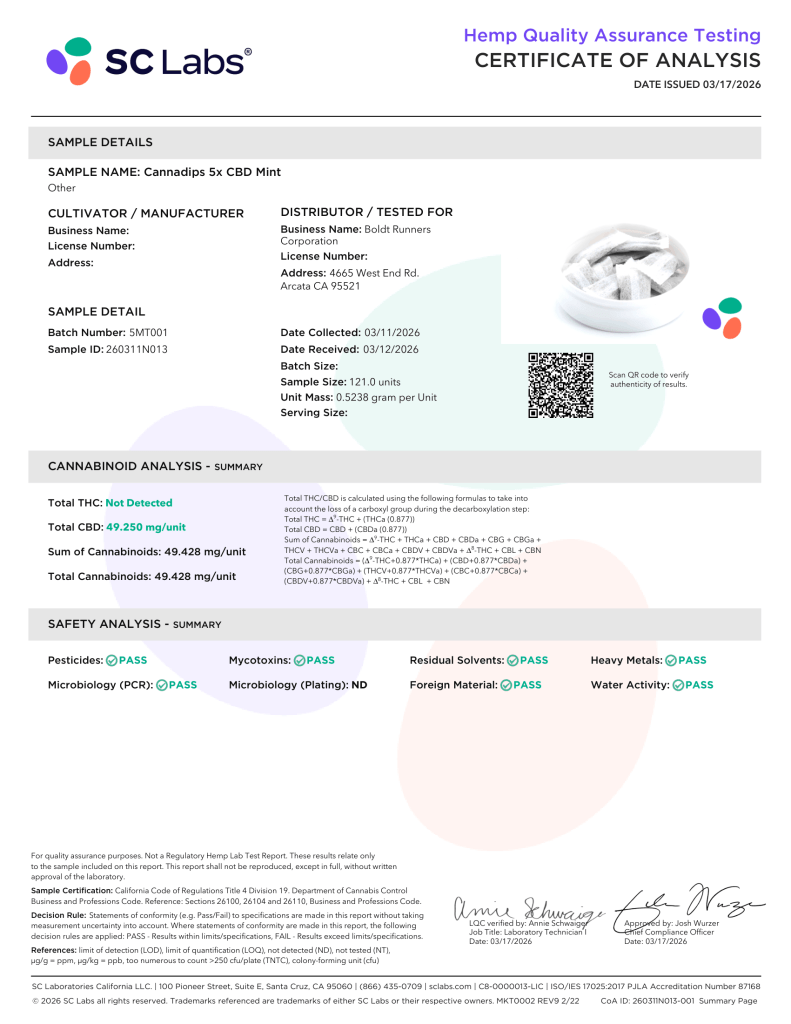
Common CBD COA Terms Explained
Reading a COA can feel a little like reading a foreign language so before your eyes glaze over from all the abbreviations and lab jargon, let’s cover a few terms you’ll see again and again.
- ND (Not Detected) – The lab didn’t detect the substance above the testing threshold. This is typically what you want to see when reviewing contaminants such as pesticides, heavy metals, residual solvents, and harmful microbes.
- LOD (Limit of Detection) – Smallest amount of a substance that the lab can detect.
- LOQ (Limit of Quantification) – Smallest amount of a substance that the lab can accurately measure and report.
- mg/ml (Milligrams Per Milliliter) – A measurement used to show CBD concentration. For example, a 3000mg CBD tincture in a 30mL bottle contains approximately 100mg of CBD per mL.
- ppm (Parts Per Million) – A measurement commonly used when reporting trace contaminants such as heavy metals, pesticides, or residual solvents.
Verify the Batch Number
Before you start playing detective with all the numbers on a COA, make sure you’re looking at the right report. A CBD COA is tied to a specific production batch, not every product that company has ever made. Because hemp is a natural agricultural product, cannabinoid levels, terpene profiles, and contaminant screenings will vary slightly from batch to batch.
Think of hemp like wine grapes. No two harvests are perfectly identical because growing conditions, weather, soil quality, and genetics can cause measurable differences in the final product. That’s why reputable brands publish batch-specific COAs instead of relying on a single report forever.
What to look for:
- Product name matches packaging
- Batch or lot number matches the product
- Test date clearly listed
- Laboratory information provided
- The COA was issued by an independent, third-party lab
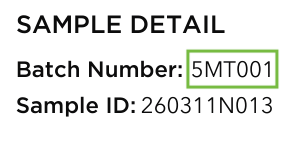
If the batch number on the product doesn’t match the batch number on the COA, you could be looking at results from a different production run. Bonus points if the report comes from an ISO/IEC 17025-accredited laboratory. This accreditation confirms that the lab follows internationally recognized standards for testing procedures, quality control, and result accuracy.
The Potency Profile
Usually the first page of a COA will outline the product’s cannabinoid profile. This is where you’ll find concentration details for all the cannabinoids it contains (CBD, CBG, CBN, THC, etc.).
What to look for:
- THC content: The (federal) legal limit for THC is 0.3%. If the COA shows 0.4% or higher, it’s technically an illegal product.
- Milligram match: If the product is a 3000mg bottle, the COA should show ~100mg per ml. If the math doesn’t math (off by more than 10%), then the product is severely underdosed and/or falsely advertised. For quick reference, use the formula: Total mg in bottle / total mL in bottle = mg per mL.
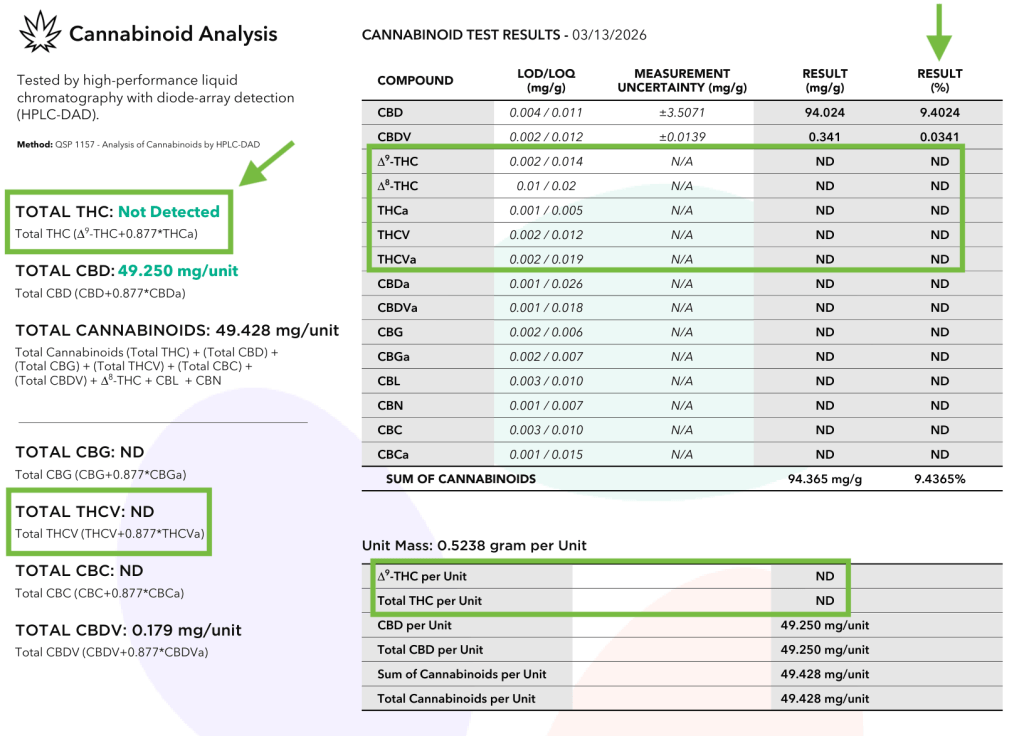
If you’re struggling with the numbers, check out Cloud City’s CBD Dosage Guide that breaks down how to determine the right potency for your lifestyle.
The Safety Screen
The safety screen can be intimidating to some, but it actually contains some of the most important information on a COA. Because hemp is a bio-accumulator – meaning it sucks up everything from the dirt it grows in – the soil quality is a notable factor to pay attention to.
What to look for:
Requirements for a CBD COA in 2026 include:
- Heavy metals: E.g., lead, arsenic, cadmium, and mercury. If you don’t see an “ND” (for None Detected) or “Pass” next to these names, put the bottle down!
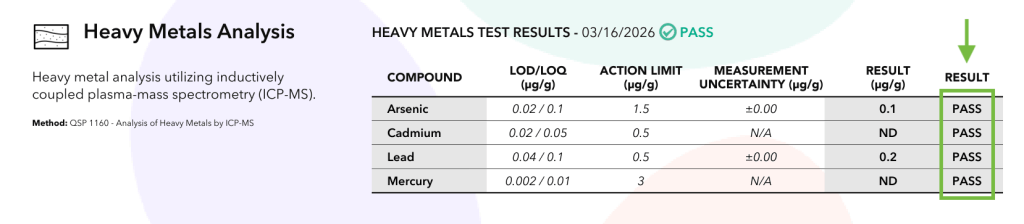
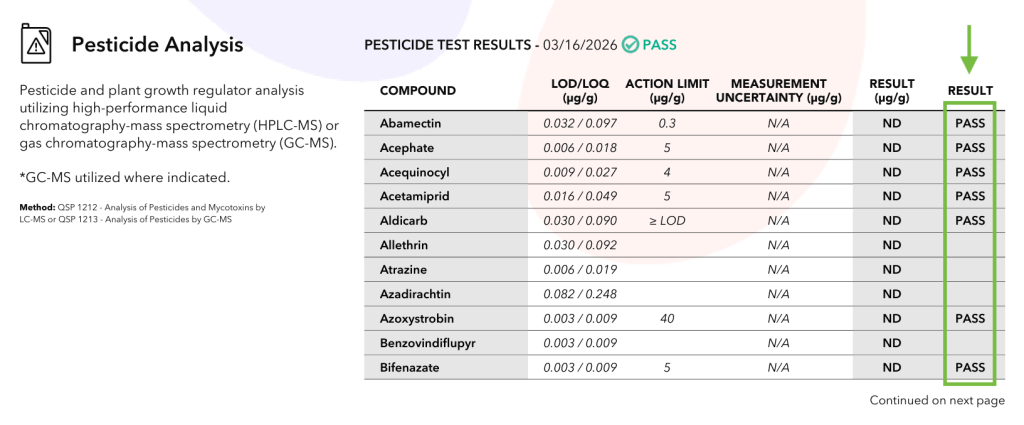
- Pesticides: Commonly-used preservatives have raised red flags for many brands as cannabis restrictions tighten, many of whom are still using pesticides that haven’t been legal since the 70s. If the brand you’re shopping from were selling products like this, you’d find out by reading the COA.
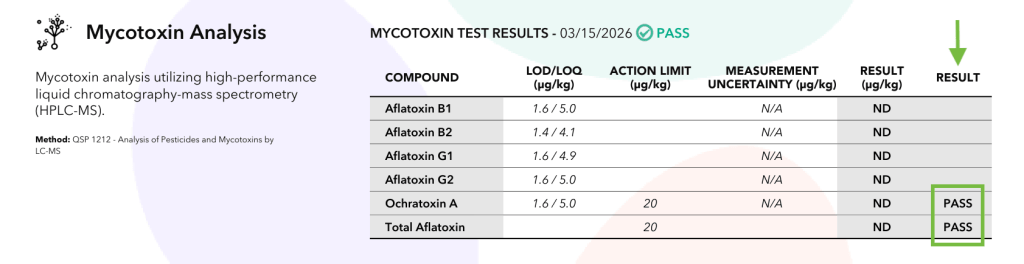
- Mycotoxins: Mold and fungus. Toxic compounds produced by them can develop during cultivation or storage, making mycotoxin testing an important part of a complete CBD safety screen. For obvious reasons, we want to rule these out when shopping for CBD!
Residual Solvents
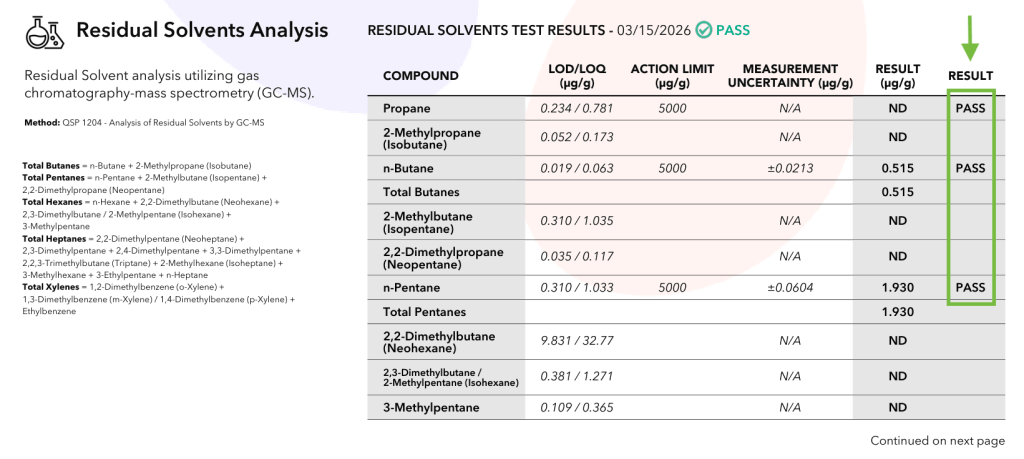
The COA should explain how the CBD was extracted. This matters because if cheap butane or propane were used during extraction, there may be “residual solvents” lingering in the finished product. What’s more, these volatile organic compounds (VOCs) can cause both acute and long-term health risks if gone undetected.
What to look for:
- A “Pass” on all solvents.
- Cloud City recommends CO2-extracted cannabis products. This extraction method leaves zero chemical footprint and is therefore considered the gold standard in cannabis production.
Microbial Testing
CBD products can also be contaminated by microorganisms that nobody wants anywhere near their wellness routine. So reputable laboratories will also test for these microbial contaminations which can potentially happen during cultivation, processing, packaging, or storage.
What to look for:
- Salmonella
- E. coli
- Mold
- Yeast
- Aspergillus and other fungi
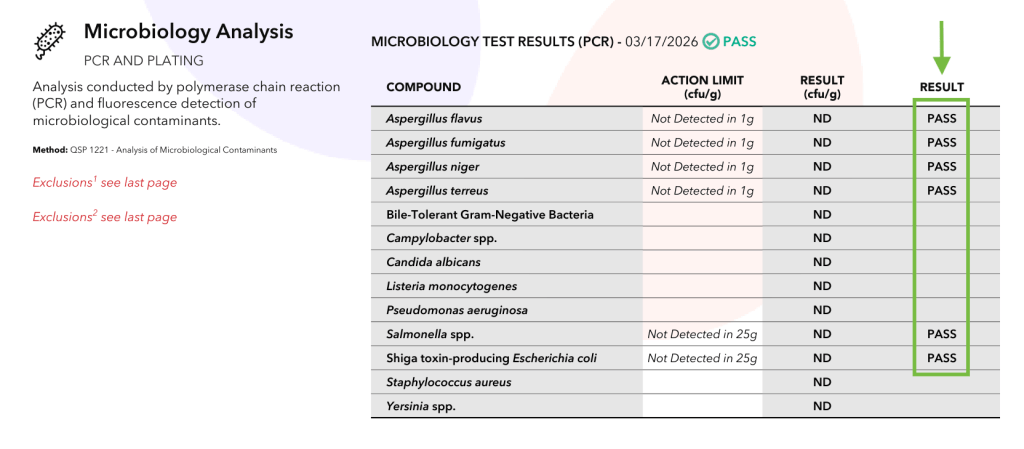
Most COAs will display either a ‘Pass’ result or ‘ND’ (Not Detected) for these contaminants. If a product fails microbial testing, it may contain harmful microorganisms that can affect both product quality and consumer safety.
The Entourage Effect
Let’s get less serious and more fun, shall we?
The entourage effect explains how the different elements of the cannabis plant (i.e., CBD, THC, terpenes, flavonoids) complement one another to enhance therapeutic effects beyond those of any single isolated compound. In 2026, “full spectrum” means less on a product label vs. the terpene profile listed on its COA. For example, the terpenes limonene (for focus) or myrcene (for sleep) are what make CBD actually applicable for treating specific issues, such as anxiety or sleep disturbances. If the COA reports zero terpenes, all that brand is doing is blowing smoke. Pun intended!
To learn more about the entourage effect, check out this deep dive on the benefits of cannabinoids and how they work better together.
Quick CBD COA Checklist
I’ve covered a lot of information so far and I know that might be a little overwhelming. To make your life easier, I’ve created a checklist you can use next time you’re evaluating a CBD product.
- Batch number matches product
- Third-party lab performed testing
- Lab accreditation information is available
- THC level is within legal limits ((≤ 0.3%))
- CBD content matches the product label
- Heavy metals show ‘Pass’ or ‘ND’
- Pesticides show ‘Pass’ or ‘ND’
- Residual solvent testing shows ‘Pass’
- QR code leads to a valid, current COA
If a product fails multiple items on this list or the information is missing entirely, consider it a red flag.
Other Important Factors: CBD COA Red Flags
In a nutshell, here’s your list of major red flags to look out for when reading a CBD product’s Certificate of Analysis:
- “In-house” lab testing: If the brand owns the lab that tests their products, that’s a conflict of interest and a red flag. Always check COAs to ensure an independent, third-party, ISO-certified lab produced them.
- Fake QR codes: It should take you to a working, up-to-date webpage. If you scan it and it returns a “404 Error” or redirects to a generic homepage, question it.
- Missing “LOD” or LOQ”: These are lab terms for “limit of detection.” If a lab can’t define this in proper language, it may indicate they’ve cut corners somewhere or have something to hide.
Your ability to read and analyze a CBD COA = your ability to make informed decisions about your personal health. Cloud City has spent the last four years at the top of Silicon Valley’s CBD favorites not because they sell premium cannabis products, but because they sell peace of mind. When you shop at Cloud City, you can rest assured that any product you pick up has been vetted and meets the highest standards. Stop by the downtown Campbell store to chat with an expert budtender so you don’t have to play amateur toxicologist just to get a good night’s sleep.
Read more:
What is CBD?
What is Delta-9 THC?